Custom Couple Portrait
A custom portrait of the two of you, drawn from photographs. You do not need a good picture of you both together, which is the constraint that stops most couples ever having one made: each person is described from their own photo and the pair are then drawn into a single scene. You see the whole portrait before paying, watermarked until you do.
How it works
- 1
One photo of each of you
They can be from different days, different years, different continents. What matters is that each face is clearly lit and reasonably large in its own frame — not that the two pictures match.
- 2
Say what the portrait is about
Optional, and it changes the result more than the style does. Where you met, the flat with the broken boiler, the holiday that went wrong. A scene beats a pose, and the specific detail is what makes it yours.
- 3
Check both likenesses before paying
The whole portrait is shown, watermarked. Couples notice a wrong face faster than anyone — the recipient knows both of them better than they know their own. If one is off, swap that photo and run it again.
The photograph you do not have
Almost every couple has the same gap: hundreds of pictures of each other and almost none of the two of them together, because somebody is always holding the camera. The ones that do exist are usually from a wedding, someone else’s wedding, or a night out. A drawn portrait does not have that constraint. Two separate photographs become two described people in one scene, which is the entire reason this format exists for couples rather than being a novelty.
Holding two likenesses at once
The technical difficulty is drift: most tools pull faces toward a house average, and the result is a couple who look like siblings. Here a written description of each person is taken from their own photograph — face, hair, build, colouring, clothing — and both descriptions are passed into every image. It is the same mechanism that keeps a single face stable across a comic page, run twice. It matters more for couples than for anything else, because the person receiving it knows both faces intimately and will spot a wrong jaw immediately.
What to have drawn
The meeting story is reliably the strongest, because it has a shape — a before, an accident, an after — and because most couples have told it enough times that the details are fixed. Engagements make good pages. Weddings make handsome and slightly stiff ones, since everyone is posed and nothing happens. If you want a scene rather than a story, the flat you first shared or the place you always go works better than a studio background.
For couples who are apart
Nothing is shipped, so there is no customs form, no delivery date and no cut-off. The files exist the moment you pay and can be sent at midnight in whichever timezone is correct. For a couple separated by an ocean this is often the only version of a personal gift that arrives on the actual day.
Why couple portraits go wrong more often than single ones
A portrait of one person has one likeness to get right. A portrait of two has two, plus the relationship between them — and most tools quietly lose one of the pair. Worth knowing what fails before choosing how to have it made.
| What differs | A typical photo-to-art filter | Cartoon It |
|---|---|---|
| Both faces | Frequently pulls both toward the same average, so a couple comes out looking related. | Each person is described separately from their own photo, then drawn into one scene. |
| One photo of both | Usually required, because it restyles the image you gave it. | Not required. Two separate photographs, taken years apart, work fine. |
| More than one image | Ask for a second and it is a different couple. | The same two descriptions go into every page, which is what holds a pair steady. |
| The setting | Whatever was behind you, blurred. | A drawn scene chosen to suit the story — where you met, where you got engaged. |
| Cost | Often free, usually watermarked, frequently a subscription after a few. | $3.99 to $11.99, one payment, seen watermarked first. |
Questions
Do we need a photo of us together?
No, and that is the main reason to use this. One photo of each person is enough, taken at any time in any place. Both are described separately and then drawn into a single scene, which is usually easier than finding one good picture of the two of you.
Will we both actually look like ourselves?
A written description of each person — face, hair, build, colouring, clothing — is taken from their own photo and reused in every image. That is what stops either of you drifting into someone else, which is the usual failure when a tool restyles one photograph containing two faces.
How much does a custom couple portrait cost?
From $3.99 for a single portrait, $5.99 for two pages, $7.99 for a three-page story and $11.99 for three pages with a custom cover. One payment, no subscription, and the finished portrait is shown to you — watermarked — before any charge.
What makes a good couple portrait?
A specific shared moment rather than a pose. How you met works best because it has a beginning and an end. A scene with something happening in it beats two people standing side by side, which is what a photograph already does better.
Can we include a pet or family?
Yes. Up to six characters in total, each from a separate photograph, and animals are described the same way people are — breed, coat, markings, ears and tail.
Can it be printed for an anniversary?
Yes, and the first anniversary is traditionally paper, which a printed portrait answers more literally than a card does. Downloads are a full-resolution PNG and an A4 PDF; it is sharp at A5 and fine at A4.
Last updated . Prices and limits on this page are checked when it changes.
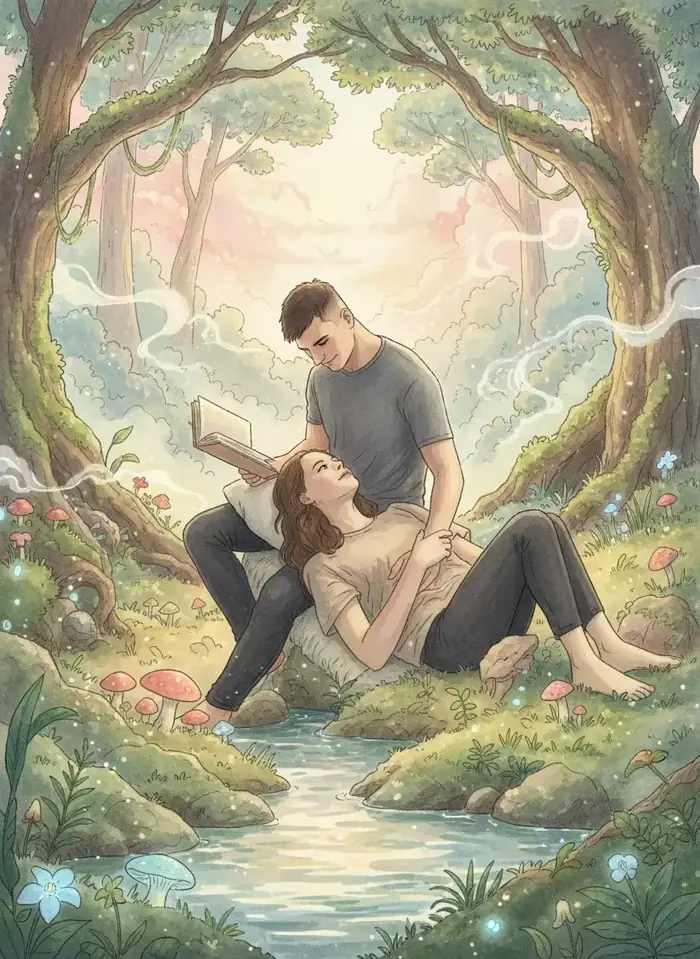
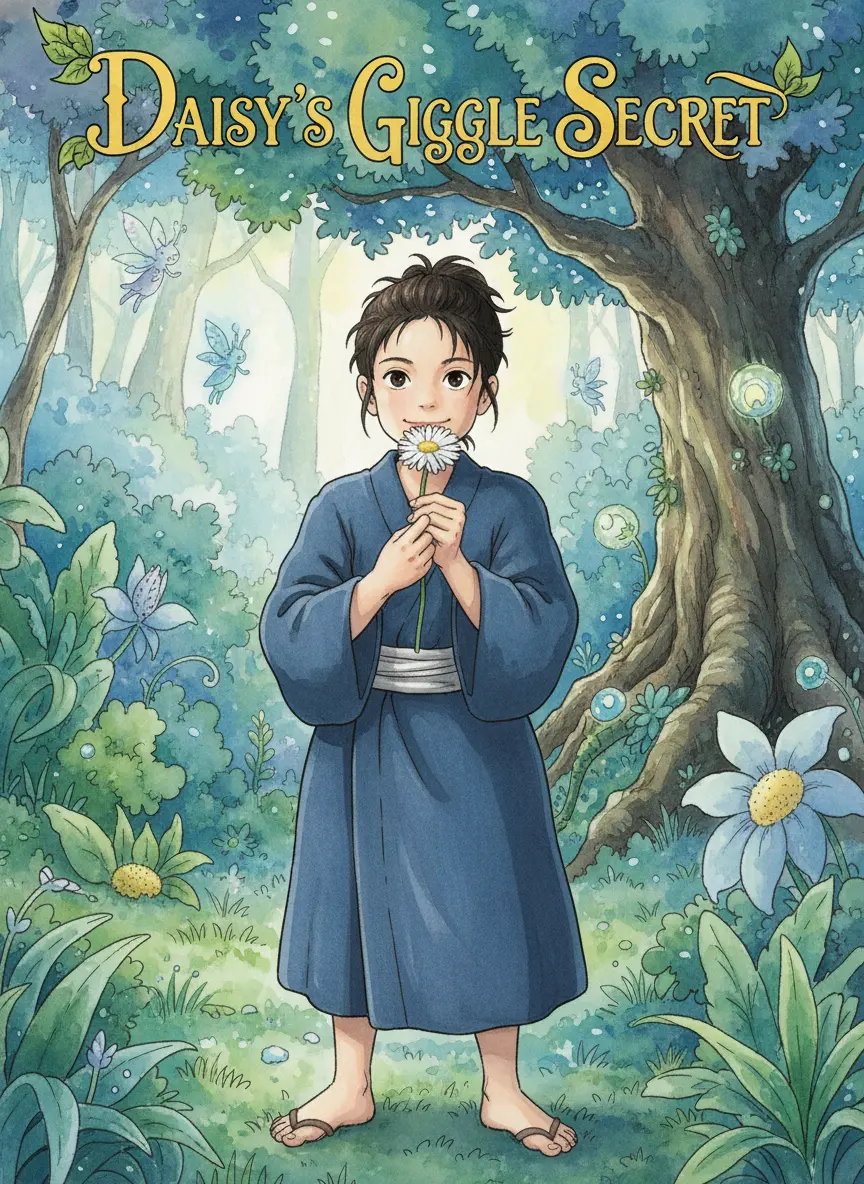
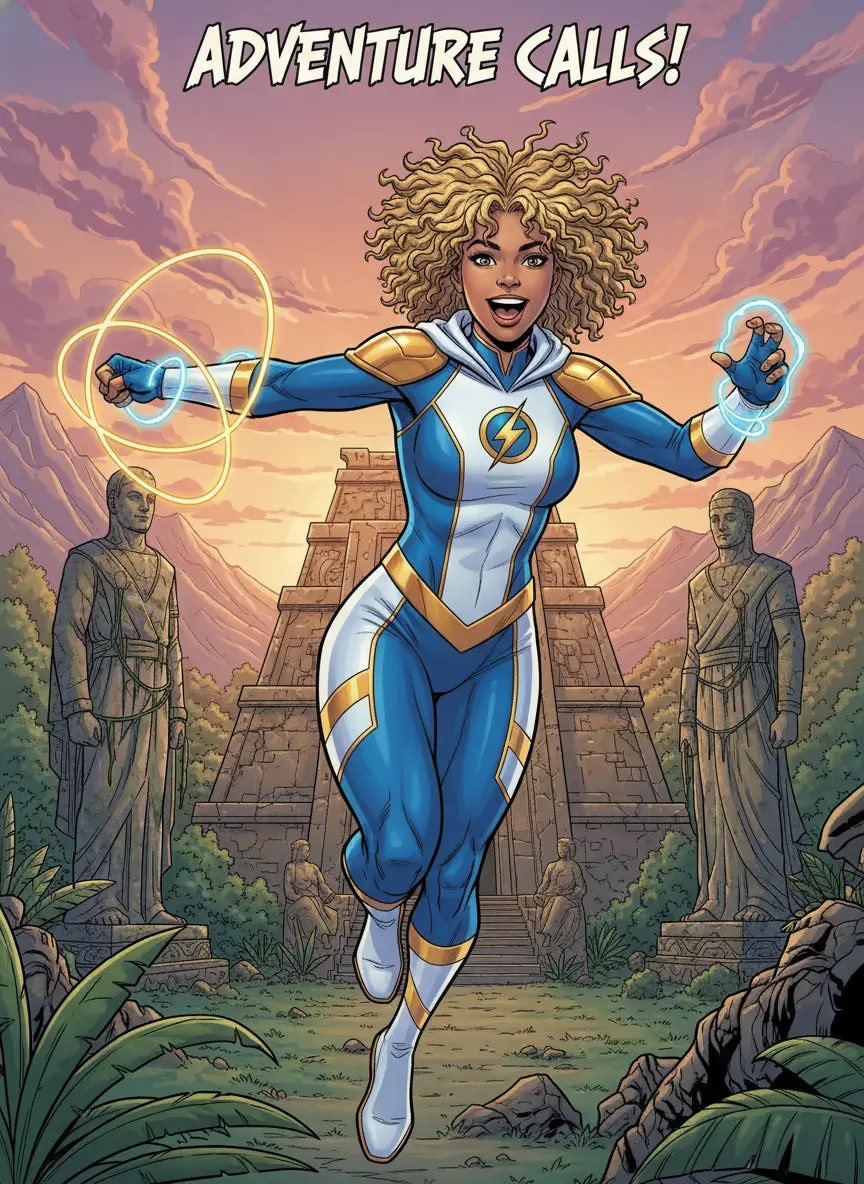
Pages it has made
Finished output, not mock-ups.
See yours before you pay
Generating and previewing costs nothing and needs no account. Downloads start at $3.99, one time.
We use analytics cookies to see which pages work and which do not. Nothing is set unless you agree, and we never sell your data. Privacy Policy