Why AI Comics Lose the Face Between Panels

The Cartoon It Team
Editor @ Cartoon It
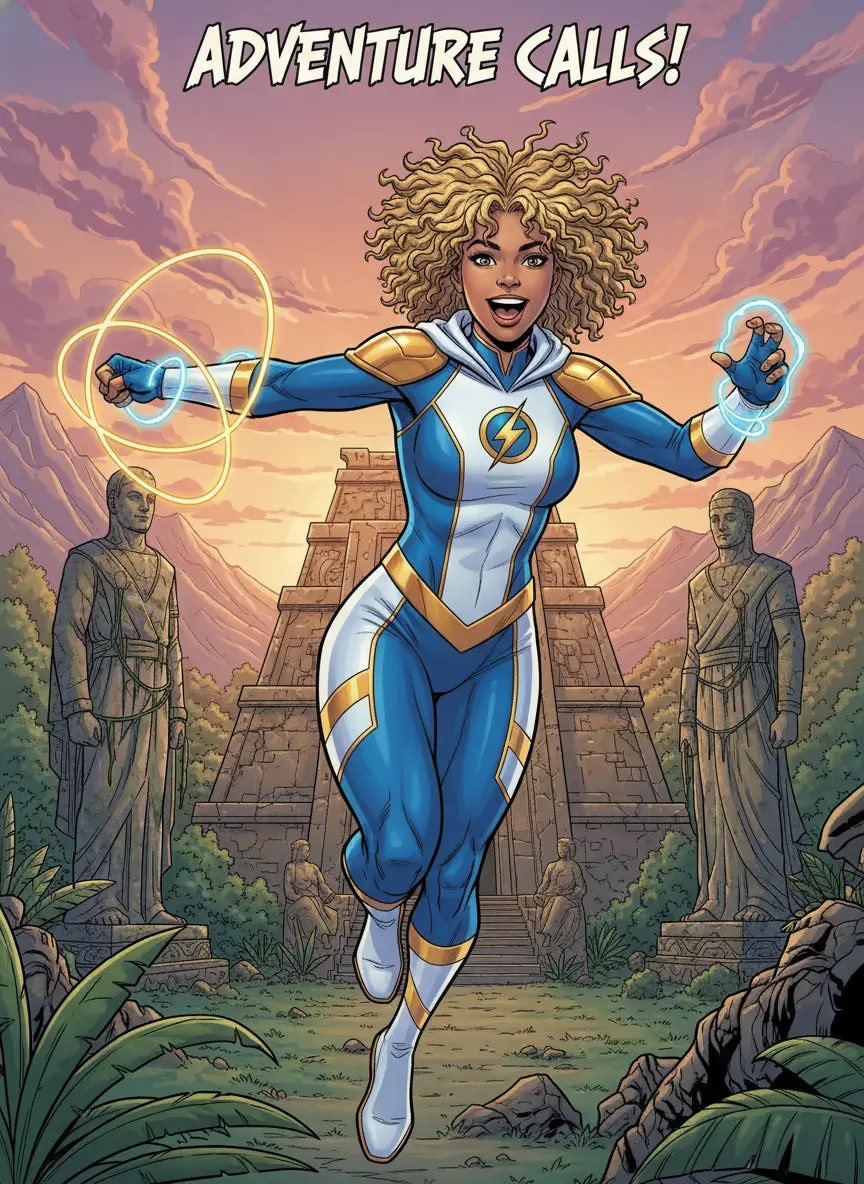
Generating one good comic panel is close to solved. Generating six of them with the same person in each is not, and it is the single thing that separates a comic from a pile of nice pictures.
The failure everyone hits
Ask any image model for a six-panel comic starring the person in your photo and you will usually get six relatives. The hair shifts. The jaw changes. The jacket is green in panel two and grey in panel five. Each image is defensible on its own, and together they are not a story about anyone.
The reason is structural rather than a shortcoming of the model. Every panel is an independent request. The model has no memory of the last one and no preview of the next. Worse, in our pipeline the pages are rendered concurrently — all of them in flight at once, so page four can finish before page two starts. There is no sequence to inherit from even in principle.
So consistency cannot come from the panels. It has to be decided before any drawing begins, and handed to every request identically.
Why "just send the photo again" is not the fix
The obvious answer is to attach the original photograph to every panel request. We do — the photos go out with all of them. It is necessary and it is not sufficient.
A photograph is not a description. Handed the same picture six times, the model interprets it six times, and small differences in interpretation are exactly what you see as drift. What has to be fixed is not the input but the reading of it: the photo should be interpreted once, in words, and that interpretation reused verbatim.
Two models, and the order matters
Nothing is drawn until a writer model has read the photos and returned a script. Alongside the story, it returns a structured cast — one entry per person, each with a label and a written description of how that person looks.
Those entries are flattened into a single line of prose, the character anchor, and that exact string is passed into every page request along with one fixed mood, one setting and one style. Panels are drawn against the same sentence rather than against six fresh readings of the same face.
THE COUNTING PROBLEM
The cast is counted by distinct people, not by photos. Three selfies of one person are one cast member. Get this wrong and a comic about you stars three strangers who happen to resemble you — which is what happens if you assume one upload means one character.
The cast size is a number, not a hint
An early version left the artist to infer how many people were in the story from the anchor prose. Prose is a bad way to communicate a count. A two-person story would come back with three people in a panel, or one, because "Sarah: red coat, freckles. Tom: tall, glasses" does not read as exactly two to something generating pixels.
The count now travels separately as an integer and is stated explicitly in the prompt. A related constraint forbids cloning — the same character must not appear twice inside one panel, which is a favourite failure when a model is told a person is important.
The seed that did nothing
A shared seed is standard advice for consistency, and we followed it. It was written into the prompt text: Variation Seed: 48213.
That does nothing. A seed is an API parameter — a control on the sampler. Put it in the prompt body and it is not a seed at all, just a few random tokens added to every request, quietly diluting the instructions that mattered. It looked like a consistency feature and was closer to noise.
There is now a test that fails if a seed ever appears in prompt text again. The general lesson is worth more than the specific bug: a parameter in the wrong place does not error, it just silently stops being the thing you think you configured.
What still breaks it
An anchor can only describe what the writer could see. The failure modes that remain are all upstream of it:
- Sunglasses and heavy shadow. Half the face is missing, so the description invents the other half — and invention is not stable.
- A single photo at one angle. Two or three shots of the same person give the writer more to work from and produce a noticeably tighter anchor.
- Faces in the background. Someone over your shoulder is a distinct person to the writer, gets a cast entry, and is written into your story.
- Hands. Still hands.
The short version
Consistency is not something you ask an image model for. It is something you decide once, write down, and refuse to recompute — while sending the count as a number, keeping the seed where the API can see it, and accepting that a face behind sunglasses was never going to hold.
Turn YOUR Photos
Into Comics
Join 1,500+ storytellers making manga, superhero, and 3D animated stories in seconds.
Start for Free • No Credit Card Required